
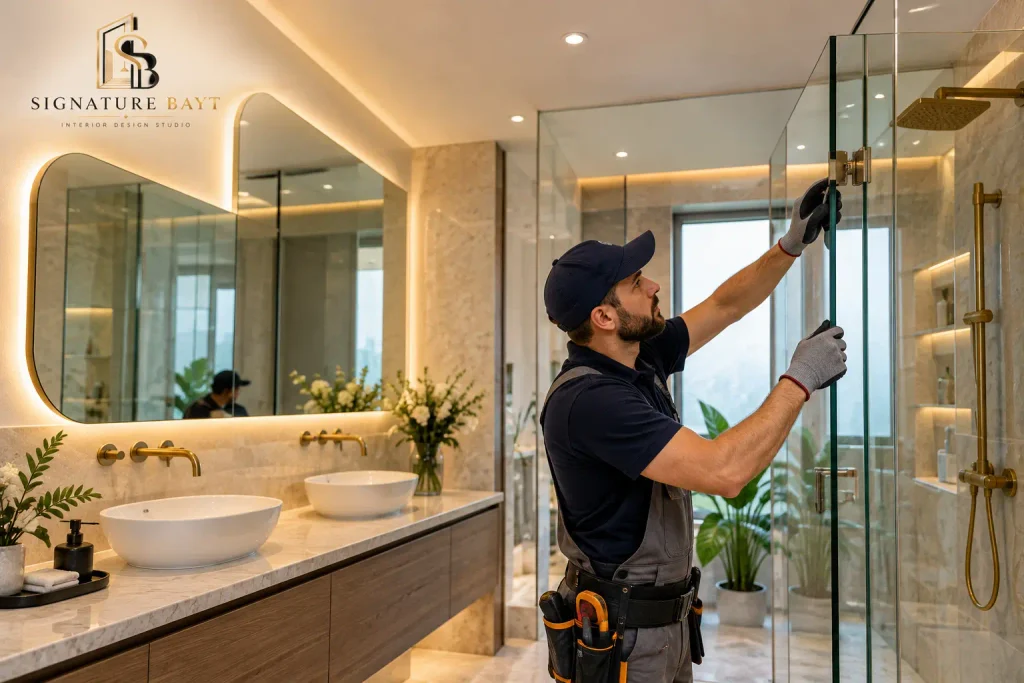
Custom Glass & Mirror Solutions in Qatar can transform ordinary interiors into refined, contemporary spaces by combining transparency, reflection, light, proportion, and tailored design. Rather than using standard glass panels or ready-made mirrors, bespoke solutions allow homeowners and businesses to create features that respond directly to the architecture, dimensions, and visual character of each space. As a result, glass and mirrors can become important design elements instead of simply functional additions.
In modern Qatar interiors, designers increasingly use custom glass, bespoke mirrors, decorative glass, partitions, shower enclosures, feature mirrors, and other reflective surfaces to create a more polished atmosphere. Moreover, these elements can work across villas, apartments, bathrooms, bedrooms, living rooms, kitchens, offices, retail environments, hospitality spaces, and reception areas. By selecting the right shape, finish, size, transparency, and placement, you can create a design that feels both practical and visually distinctive.
At Signature Bayt, custom glass and mirror design can become part of a broader interior concept. Instead of choosing each feature separately, the design process can coordinate glass and reflective surfaces with flooring, wall finishes, furniture, lighting, cabinetry, colours, and architectural details. Therefore, the final result can maintain a stronger sense of balance throughout the property.
Whether you want to divide an open-plan room without making it feel enclosed, enhance natural light, introduce a statement mirror, create an elegant bathroom enclosure, or add a distinctive feature to a luxury villa, bespoke glass and mirror solutions provide considerable design flexibility. This guide explores the most useful applications, popular styles, selection considerations, benefits, installation stages, and practical ideas for using Custom Glass & Mirror Solutions in Qatar to create sophisticated residential and commercial interiors.
What Are Custom Glass & Mirror Solutions in Qatar?
Custom Glass & Mirror Solutions in Qatar involve designing and producing glass or mirror elements according to the specific dimensions, functional requirements, and aesthetic direction of an interior. Instead of adapting a standard product to an existing space, the design can work around the space itself.
This approach provides greater flexibility because the glass or mirror can be considered alongside the architecture. For example, a designer can plan a full-height mirror around a particular wall, create a glass partition according to the room’s layout, or develop a decorative mirror shape that complements existing furniture and lighting.
Understanding Bespoke Glass and Mirror Design
Bespoke glass and mirror design focuses on creating a solution for a particular space rather than relying exclusively on standard dimensions. Consequently, designers can consider measurements, proportions, finishes, edges, shapes, colours, transparency, and surrounding materials before finalising the concept.
How Custom Solutions Transform Interior Spaces
- Create distinctive feature walls with reflective surfaces.
- Define different areas while maintaining an open visual connection.
- Introduce greater visual depth into selected interiors.
- Coordinate mirrors with furniture, lighting, and architectural features.
- Develop glass elements around unusual or specific room dimensions.
Combining Aesthetics, Functionality, and Modern Design
A successful custom installation should support both appearance and practical use. Therefore, the design should consider where the glass or mirror will be positioned, how people will interact with it, how it relates to lighting, and how it contributes to the overall interior concept.
Why Choose Custom Glass & Mirror Solutions for Your Interior?
Standard interior products may not always suit the proportions or design requirements of a particular property. Custom solutions, however, allow the design to respond more closely to the space. As a result, glass and mirrors can become integrated parts of the interior rather than separate decorative additions.
- Create an elegant appearance: Bespoke glass and mirrors can add a refined contemporary character.
- Enhance light: Reflective surfaces can interact with available natural and artificial light.
- Support visual openness: Glass can separate areas without creating the same visual barrier as solid walls.
- Personalise the design: Custom dimensions and shapes can reflect individual design preferences.
- Coordinate different materials: Glass and mirrors can complement stone, wood, metal, microcement, tiles, and other finishes.
Create a More Elegant and Contemporary Appearance
Glass and mirrors naturally complement contemporary interiors because they introduce clean surfaces and controlled reflections. Moreover, a carefully selected design can enhance luxury without requiring excessive decoration.
Enhance Natural and Artificial Light
Mirrors can reflect light from windows, decorative fixtures, and other sources. Meanwhile, transparent or translucent glass can help maintain visual connections between areas. Therefore, placement should be considered alongside the lighting plan.
Make Interior Spaces Feel More Open
Glass partitions can define zones without visually closing them off completely. Consequently, they can work particularly well in open-plan homes, offices, studios, and hospitality interiors.
Add a Personalised Design Element
Custom shapes, proportions, finishes, and framing options allow homeowners to move beyond generic designs. As a result, a mirror or glass installation can become a distinctive feature of the room.
Custom Glass Solutions for Modern Qatar Interiors
Glass offers considerable versatility in interior design. Depending on the intended use, designers can incorporate it into partitions, doors, shower areas, decorative features, and other architectural elements. Furthermore, the right glass treatment can change the balance between openness, privacy, and visual connection.
Custom Glass Partitions
Glass partitions can divide an interior into functional zones while preserving a sense of openness. They can work particularly well between living and dining areas, offices, meeting rooms, bedrooms, dressing areas, and other spaces where complete visual separation is unnecessary.
Glass Shower Enclosures
Custom shower enclosures can help create a clean and contemporary bathroom. The design can be coordinated with the shower layout, bathroom finishes, vanity, fittings, and available space.
Decorative Glass Features
- Textured glass panels.
- Fluted glass features.
- Decorative interior screens.
- Glass display features.
- Accent panels integrated into furniture or walls.
Glass Doors and Entry Features
Glass doors can create a visually lighter transition between rooms. Depending on the concept, designers can combine glass with metal, timber, or other framing materials to establish a distinctive entrance or interior transition.
Bespoke Glass Panels for Interior Spaces
Custom panels can respond to specific wall dimensions or architectural details. Therefore, they can provide a practical way to introduce glass into areas where standard products may not fit naturally.
Custom Mirror Solutions for Luxury Interiors
Mirrors can do much more than provide a functional reflection. When designers carefully consider size, shape, position, framing, and lighting, a mirror can become a major visual feature. In luxury interiors, bespoke mirror installations can also reinforce symmetry, highlight architectural details, and create stronger visual depth.
Bespoke Wall Mirrors
A wall mirror can become a focal point when its dimensions and shape respond to the surrounding furniture and architecture. For example, a large custom mirror can complement a feature wall or provide visual balance behind a console or seating area.
Full-Height and Large-Format Mirrors
Large mirrors can create a stronger reflective presence and visually extend selected areas. However, their placement should remain intentional so the reflection supports rather than overwhelms the room.
Decorative Mirrors for Feature Walls
- Use geometric forms for contemporary interiors.
- Choose curved shapes for softer visual movement.
- Combine multiple mirror sections to create a designed composition.
- Use framing to connect the mirror with furniture or architectural details.
- Coordinate mirror placement with decorative lighting.
Bathroom and Vanity Mirrors
Custom vanity mirrors can be designed around the width and height of the vanity. Moreover, the mirror can work with wall finishes, lighting, taps, basins, and storage to create a cohesive bathroom composition.
Custom-Shaped and Statement Mirrors
Unusual shapes can introduce personality into an otherwise restrained interior. Arched, rounded, geometric, or other customised forms can become statement features when their proportions complement the surrounding design.
How Custom Glass and Mirrors Elevate Interior Design
The strongest interior results come from integrating glass and mirrors into the design from the planning stage. Instead of adding reflective features after the main design has been completed, designers can consider them alongside furniture, finishes, lighting, and architectural elements.
| Design Element | How Glass or Mirrors Can Contribute |
|---|---|
| Lighting | Reflect light and support brighter visual compositions. |
| Space Division | Separate zones while maintaining visual connection. |
| Feature Walls | Create depth and a distinctive focal point. |
| Bathrooms | Support clean shower and vanity designs. |
| Furniture | Complement consoles, wardrobes, cabinets, and display units. |
| Architecture | Highlight selected walls, openings, transitions, or structural features. |
Use Glass to Define Spaces Without Closing Them Off
Open-plan interiors often need some form of zoning. Glass can provide that separation while maintaining visual continuity. Consequently, it can help preserve the feeling of openness while giving each area a clearer function.
Use Mirrors to Reflect Light and Create Visual Depth
Strategically positioned mirrors can reflect selected views, lighting, or architectural features. Therefore, designers should consider what the mirror will reflect before finalising its location.
Combine Transparent, Reflective, and Decorative Surfaces
Combining different glass and mirror treatments can create controlled contrast. For instance, transparent glass can maintain openness while textured glass introduces privacy and a decorative layer.
Match Glass and Mirror Designs with the Interior Style
For a cohesive result, the glass and mirror design should relate to the room’s furniture, colours, materials, hardware, and lighting. As a result, the installation feels integrated rather than visually disconnected.
Custom Glass & Mirror Designs for Different Spaces
Every room creates different opportunities for glass and mirror applications. Therefore, the design should begin with the purpose of the space and then determine how reflective or transparent elements can support that purpose.
Living Room Glass and Mirror Features
Create Elegant Feature Walls
A custom mirror composition can create a strong focal point behind a console, sofa, or decorative installation. Meanwhile, carefully selected glass features can introduce a lighter architectural element.
Introduce Reflective Decorative Elements
- Statement mirrors above consoles.
- Decorative glass screens.
- Mirrored architectural panels.
- Glass display features.
Bedroom Glass and Mirror Solutions
Add Full-Length Mirrors
Full-length mirrors can provide a practical dressing function while also contributing to the visual composition of a bedroom. Their proportions should complement wardrobes, doors, furniture, and circulation paths.
Create Stylish Wardrobe and Dressing Features
Mirrored wardrobe doors or custom dressing-area features can combine storage with reflection. Consequently, the design can remain functional while supporting a polished bedroom aesthetic.
Bathroom Glass and Mirror Solutions
Design Modern Shower Enclosures
Custom shower glass can follow the available bathroom layout and coordinate with the selected fittings and finishes. Therefore, the enclosure can become part of the overall bathroom design.
Coordinate Mirrors with Vanity Areas
A vanity mirror should relate to the basin, countertop, lighting, wall finish, and available width. This coordination helps create a more balanced bathroom composition.
Kitchen Glass Applications
Add Decorative Glass Backsplashes
Glass can provide a clean visual surface behind selected kitchen work areas. The design should, however, consider the surrounding cabinets, worktop, lighting, and overall kitchen style.
Introduce Glass Cabinet Features
Glass-fronted cabinetry can break up solid cabinet runs and create opportunities to display selected items while maintaining an organised appearance.
Commercial Interior Glass Solutions
Create Professional Glass Partitions
Offices and commercial spaces can use glass partitions to create defined work areas while maintaining visual connection and natural light flow.
Enhance Reception and Display Areas
Custom glass and mirrors can strengthen the visual identity of reception areas, showrooms, retail spaces, and hospitality interiors when integrated into the wider design concept.
Popular Glass Finishes and Styles for Modern Interiors
The appearance of glass can change considerably depending on its finish and treatment. Therefore, the right choice should reflect the desired balance between openness, privacy, texture, light, and decoration.
- Clear glass: Maintains strong visual transparency and an open appearance.
- Frosted glass: Provides a more private visual effect.
- Tinted glass: Introduces colour and a distinctive contemporary character.
- Textured glass: Adds visual depth and surface interest.
- Fluted glass: Creates vertical texture while providing a more filtered visual connection.
Clear Glass for an Open Visual Effect
Clear glass works well when maintaining visual connection is a priority. Consequently, it can suit open-plan partitions, shower enclosures, doors, and selected architectural applications.
Frosted Glass for Privacy
Frosted glass reduces direct visibility while retaining the benefits of a glass-based design. Therefore, it can be useful in bathrooms, offices, bedrooms, and other areas where privacy matters.
Tinted Glass for a Distinctive Appearance
Tinted glass can introduce a more dramatic or sophisticated visual character. Its colour should complement the surrounding palette so that it strengthens rather than conflicts with the interior.
Textured and Decorative Glass
Textured glass can introduce subtle pattern and depth without relying on additional decorative objects. As a result, it can serve as both a functional and aesthetic feature.
Fluted Glass for Contemporary Interiors
Fluted glass has become a popular design feature because its vertical texture adds rhythm and filtered transparency. It can work especially well in partitions, cabinets, doors, and decorative screens.
Popular Mirror Styles for Luxury Interior Design
| Mirror Style | Design Character | Suitable Applications |
|---|---|---|
| Frameless Mirror | Clean and minimalist | Bathrooms, bedrooms, modern interiors |
| Framed Mirror | Decorative and defined | Living rooms, bedrooms, entrance areas |
| Backlit Mirror | Soft and contemporary | Bathrooms, dressing areas |
| Oversized Mirror | Bold and spacious | Feature walls, living rooms, boutiques |
| Geometric Mirror | Creative and distinctive | Feature walls, hospitality, luxury interiors |
Minimalist Frameless Mirrors
Frameless mirrors provide a clean appearance and allow the reflective surface itself to become the main feature. They can work particularly well with minimalist and contemporary interiors.
Decorative Framed Mirrors
A frame can introduce colour, material contrast, or architectural definition. For example, metal or wood-inspired framing can connect the mirror with other visible materials in the room.
Backlit Mirrors
Backlighting can create a soft glow around a mirror and add another layer to the interior lighting concept. Therefore, it can work especially well in bathrooms and dressing spaces.
Oversized Statement Mirrors
An oversized mirror can become a major focal point. However, its proportions should correspond with the wall, furniture, and surrounding architectural elements.
Custom Geometric Mirrors
Geometric mirrors can introduce a stronger artistic element into modern interiors. Designers can use repeated shapes, asymmetrical arrangements, or customised silhouettes to create visual interest.
How to Choose the Right Glass and Mirror Design
Choosing the right glass or mirror requires more than selecting a style that looks attractive. Instead, you should evaluate the purpose, dimensions, lighting, privacy requirements, surrounding materials, and overall interior direction. By considering these factors together, you can create a more balanced result.
- Consider the primary purpose of the installation.
- Measure the available space accurately.
- Review how natural and artificial light will interact with the surface.
- Match the finish with the existing interior palette.
- Consider privacy requirements where relevant.
- Think about cleaning and everyday maintenance.
- Coordinate the design with surrounding furniture and architectural details.
Consider the Purpose of the Space
First, determine whether the glass or mirror will provide privacy, separation, reflection, decoration, display, or a combination of functions. This decision will influence the most suitable design direction.
Select the Right Size and Proportion
Scale has a major influence on interior balance. Therefore, the dimensions of a mirror or glass feature should relate to the wall, furniture, ceiling height, and surrounding elements.
Match the Design with Your Interior Style
A minimalist home may benefit from simple frameless designs, while a more decorative interior may suit framed or shaped mirrors. Similarly, textured glass can complement contemporary and transitional concepts.
Consider Lighting and Reflection
Before positioning a mirror, consider what it will reflect. A carefully placed mirror can highlight an attractive feature, while an unsuitable position may reflect visual clutter. Consequently, reflection should form part of the design decision.
Balance Privacy, Functionality, and Visual Appeal
Especially in bathrooms and offices, visual appearance should work alongside privacy and practical requirements. Therefore, the selected glass treatment should respond to the intended use of the space.
Custom Glass & Mirror Solutions for Luxury Villas in Qatar
Luxury villas provide opportunities for larger and more distinctive glass and mirror features. Because these properties often contain multiple connected spaces, designers can coordinate custom installations throughout the home while maintaining a consistent visual language.
- Entrance areas: Add a statement mirror or decorative glass feature to establish an elegant first impression.
- Living rooms: Use large mirrors or glass details to complement furniture and architectural features.
- Staircases: Consider glass elements where appropriate to create a lighter visual transition.
- Master bathrooms: Combine custom mirrors with vanity, lighting, and shower glass.
- Dressing areas: Integrate full-height mirrors with wardrobes and storage.
Create Sophisticated Villa Interiors
Custom glass and mirror features can reinforce the architectural scale of a villa. Moreover, designers can use repeated materials or finishes in different rooms to establish visual continuity.
Enhance Entrance and Reception Areas
The entrance often establishes the visual identity of a home. A carefully designed mirror, glass screen, or reflective feature can therefore create an elegant focal point without overcrowding the space.
Design Elegant Staircase Glass Features
Glass can help create a lighter visual character around staircase areas when the design and installation requirements are properly addressed. It can also complement contemporary architectural styles.
Upgrade Master Bathrooms and Dressing Areas
Large custom mirrors, coordinated vanity designs, and shower glass can work together to create a sophisticated private space. Meanwhile, full-height mirrors can provide practical functionality in adjoining dressing areas.
Custom Glass Solutions for Bathrooms
Bathrooms provide some of the most practical applications for custom glass and mirrors. Because bathrooms often contain several materials within a relatively small area, coordinated glass features can help create a cleaner and more unified appearance.
- Frameless shower enclosures for a clean contemporary appearance.
- Glass shower screens for practical separation.
- Custom vanity mirrors designed around specific dimensions.
- Decorative bathroom glass for selected architectural areas.
- Coordinated glass features that complement microcement, stone, tile, or other finishes.
Frameless Shower Enclosures
Frameless shower designs can create a visually clean bathroom because they reduce the prominence of framing elements. The enclosure should nevertheless be planned according to the specific bathroom layout and installation requirements.
Glass Shower Screens
A shower screen can define the wet area while maintaining visual openness. Consequently, it can suit modern bathrooms where homeowners prefer a lighter visual separation.
Custom Vanity Mirrors
Custom mirrors can follow the exact proportions of the vanity and surrounding wall. Furthermore, their shape can echo architectural curves, cabinetry lines, or other design details.
Decorative Bathroom Glass
Textured or decorative glass can introduce visual interest while providing varying levels of privacy. Its appearance should complement the bathroom’s wider material palette.
Coordinating Glass with Microcement and Other Finishes
Glass and mirrors can work effectively alongside microcement surfaces, stone-inspired finishes, tiles, timber details, and modern fixtures. Therefore, the selected glass treatment should support the texture and colour of the surrounding surfaces.
Custom Glass and Mirrors for Commercial Spaces
Commercial interiors can use glass and mirrors to support branding, spatial organisation, customer experience, and visual presentation. From offices and showrooms to restaurants and hospitality spaces, bespoke installations can be adapted to the function and design identity of each environment.
| Commercial Space | Potential Application | Design Objective |
|---|---|---|
| Office | Glass partitions and meeting-room screens | Define work areas while maintaining openness |
| Retail Store | Display glass and decorative mirrors | Enhance product presentation |
| Hotel | Feature mirrors and glass partitions | Create a refined guest environment |
| Restaurant | Decorative glass and mirrors | Develop atmosphere and visual identity |
| Reception | Custom feature mirrors or glass details | Create a strong first impression |
Retail and Showroom Interiors
Retail environments can use mirrors and glass to create attractive display zones and guide visual attention. Additionally, reflective surfaces can complement product presentation when positioned thoughtfully.
Hotels and Hospitality Spaces
Hospitality interiors often rely on carefully controlled atmosphere. Therefore, custom glass partitions, feature mirrors, and decorative installations can contribute to a sophisticated guest environment.
Restaurants and Cafés
Restaurants can use reflective and transparent surfaces to create visual rhythm, define seating areas, and complement lighting. The design should, however, remain consistent with the restaurant’s overall identity.
Offices and Corporate Interiors
Glass partitions can provide visual separation while retaining a connection between teams and spaces. Consequently, they can support contemporary office planning where openness remains important.
The Custom Glass & Mirror Design Process
A structured design process helps ensure that the final glass or mirror installation fits the space and supports the intended visual concept. While every project can differ, a typical workflow begins with understanding the requirements and ends with reviewing the completed installation.
Step 1: Understand Your Design Requirements
First, identify the purpose of the installation, preferred style, desired finish, privacy needs, and relationship with the existing interior.
Step 2: Assess the Available Space
Next, review the dimensions, walls, openings, surrounding furniture, lighting, and architectural conditions. This assessment helps determine which custom approach suits the space.
Step 3: Develop the Custom Design
The design can then define the shape, dimensions, finish, placement, framing, and visual relationship with surrounding materials.
Step 4: Select Glass, Mirror, and Finishing Options
- Select the appropriate visual finish.
- Determine transparency or privacy requirements.
- Coordinate colour and texture with the interior.
- Consider framing and hardware where required.
- Review maintenance and practical considerations.
Step 5: Take Accurate Measurements
Accurate measurements are essential for custom fabrication. Therefore, the dimensions should be carefully confirmed before production or installation.
Step 6: Prepare for Fabrication and Installation
Once the design and measurements are confirmed, the project can move toward fabrication and installation according to the selected solution and site conditions.
Step 7: Install and Refine the Final Design
Finally, the installation should be reviewed for alignment, visual consistency, finishing details, and overall integration with the interior.
Key Benefits of Bespoke Glass and Mirror Design
Bespoke solutions provide flexibility that standard products cannot always offer. Because the design responds directly to the space, homeowners and businesses can create features that better match their interior requirements.
- Create a more open and visually connected interior.
- Improve the interaction between light and reflective surfaces.
- Add distinctive contemporary design elements.
- Support personalised architectural concepts.
- Create strong focal points without excessive decoration.
- Connect separate interior zones through consistent materials.
- Adapt the installation to specific dimensions and layouts.
Creates a More Open and Spacious Feel
Glass can maintain visual connection between spaces, while mirrors can extend the perception of selected areas. Therefore, both materials can contribute to a more open visual composition.
Improves Light Distribution
Reflective surfaces can interact with natural and artificial light. As a result, strategic placement can influence how light appears within the room.
Adds Contemporary Visual Appeal
Clean glass surfaces, carefully shaped mirrors, and refined framing can reinforce a modern interior aesthetic. Moreover, they can introduce visual sophistication without excessive ornamentation.
Supports Custom Interior Concepts
Because bespoke elements respond to individual spaces, they can support distinctive interior concepts that standard products may not accommodate as effectively.
How to Maintain Custom Glass and Mirror Features
Regular care helps maintain the appearance of glass and mirrors. Although maintenance requirements can vary according to the specific installation and finish, a simple routine can help keep surfaces clean and visually clear.
- Clean glass and mirror surfaces regularly.
- Use cleaning products suitable for the specific surface.
- Avoid abrasive materials that may damage the finish.
- Keep edges, frames, and fittings clean.
- Address marks or visible issues early.
- Follow any care instructions provided for the selected installation.
Clean Glass Surfaces Regularly
Regular cleaning can help maintain clarity and reduce the visible build-up of dust, fingerprints, water marks, and other residues.
Use Suitable Cleaning Products
Choose products appropriate for the surface and follow the manufacturer’s or installer’s care guidance where available. Consequently, you can reduce the risk of unnecessary surface damage.
Protect Edges, Frames, and Fittings
Glass and mirrors often form part of a larger installation. Therefore, keeping surrounding frames, fittings, seals, and edges clean can help preserve the overall appearance.
Why Choose Signature Bayt for Custom Glass & Mirror Solutions in Qatar?
Signature Bayt approaches interior design by considering how individual elements work together within the complete space. For custom glass and mirror projects, this design-led approach can help connect the selected feature with the property’s architecture, furniture, lighting, colours, materials, and overall aesthetic.
- Bespoke design approach: Develop solutions around the specific space and design requirements.
- Interior coordination: Connect glass and mirror features with the surrounding design concept.
- Attention to proportion: Consider dimensions and visual balance before finalising the design.
- Residential and commercial applications: Adapt concepts for villas, apartments, offices, retail, hospitality, and other interiors.
- Detail-focused thinking: Consider finishes, shapes, framing, lighting, and surrounding materials together.
Design Bespoke Solutions Around Your Space
Every property has different dimensions and architectural conditions. Therefore, Signature Bayt can approach the design around the characteristics of the actual space rather than forcing a standard visual solution.
Coordinate Glass and Mirrors with Interior Concepts
Glass and mirrors can work alongside microcement, stone, wood, metal, tiles, fabrics, furniture, and lighting. By considering these relationships together, the final interior can maintain a more cohesive appearance.
Focus on Detail, Proportion, and Visual Balance
Small details can influence the final result significantly. Consequently, proportion, placement, finish, framing, and reflection should receive careful attention during the design process.
Create Solutions for Residential and Commercial Interiors
Different environments require different approaches. A luxury villa may need statement mirrors and decorative glass, while an office may prioritise partitions and visual openness. Therefore, the design should respond to the purpose of the property.
Custom Glass & Mirror Solutions in Qatar: What Should You Consider?
Before starting a custom glass or mirror project, consider the installation’s purpose, dimensions, visual style, privacy requirements, lighting conditions, surrounding materials, and maintenance needs. More importantly, think about how the feature will contribute to the entire interior rather than evaluating it as an isolated product.
| Consideration | Key Question |
|---|---|
| Purpose | Will the feature provide reflection, separation, privacy, decoration, or display? |
| Dimensions | How should the size relate to the available wall or room? |
| Style | Does the design complement the existing interior? |
| Lighting | How will natural and artificial light interact with the surface? |
| Privacy | Does the selected glass treatment provide the required visual separation? |
| Maintenance | Can the surface be maintained appropriately for its location? |
Design and Function Should Work Together
A beautiful feature should also perform its intended role effectively. Therefore, practical requirements should guide the design alongside aesthetic preferences.
Choose Materials According to the Intended Application
Different locations create different requirements. Bathroom, office, living-room, retail, and decorative applications should therefore be evaluated individually before selecting the appropriate glass or mirror solution.
Consider Lighting, Privacy, and Proportion
These three factors can strongly influence the final appearance. Consequently, designers should consider them together rather than making separate decisions.
Plan Custom Features Before the Final Interior Installation
Planning early can help coordinate dimensions, lighting, cabinetry, wall finishes, furniture, and other elements. As a result, the glass or mirror installation can integrate more naturally into the completed interior.
Frequently Asked Questions About Custom Glass & Mirror Solutions in Qatar
1. What are custom glass and mirror solutions?
Custom glass and mirror solutions are bespoke interior features designed around specific dimensions, functions, finishes, and aesthetic requirements rather than relying only on standard products.
2. Can glass and mirrors be customised for different interior spaces?
Yes. Designers can develop glass and mirror applications for living rooms, bedrooms, bathrooms, kitchens, offices, retail spaces, hospitality interiors, entrances, and other areas.
3. What types of glass can be used for interior design?
Depending on the project, options can include clear, frosted, tinted, textured, and fluted glass. The appropriate selection depends on the intended application, privacy requirements, and design concept.
4. Can Signature Bayt create custom-shaped mirrors?
Custom mirror concepts can be developed around the dimensions, proportions, and visual requirements of the intended space. Shapes can be considered as part of the wider interior design.
5. Are custom mirrors suitable for luxury bathrooms?
Yes. Bespoke mirrors can complement vanities, lighting, wall finishes, fittings, and other bathroom features to create a coordinated luxury interior.
6. Can custom glass partitions improve an open-plan interior?
Glass partitions can define functional zones while preserving visual connection between areas. Therefore, they can be useful in open-plan homes, offices, studios, and commercial interiors.
7. How do mirrors make an interior appear more spacious?
Mirrors reflect surrounding views and light, which can create a greater sense of visual depth in selected areas. However, placement and proportion remain important for achieving a balanced effect.
8. What should I consider before choosing a custom mirror?
Consider the available wall space, desired size, shape, surrounding furniture, lighting, reflection, interior style, and maintenance requirements before finalising the design.
9. Can custom glass and mirrors be used in commercial spaces?
Yes. Offices, retail stores, showrooms, restaurants, hotels, reception areas, and other commercial interiors can incorporate custom glass and mirror features according to their design and functional requirements.
10. Why choose Signature Bayt for custom glass and mirror design in Qatar?
Signature Bayt takes a design-focused approach that considers glass and mirror features alongside the wider interior. This helps create bespoke solutions that align with the property’s architecture, materials, lighting, and overall aesthetic direction.
Conclusion: Create Bespoke Interiors with Signature Bayt
Custom Glass & Mirror Solutions in Qatar offer a flexible way to introduce elegance, visual depth, transparency, and personalised character into modern interiors. From statement mirrors and shower enclosures to glass partitions, decorative panels, and bespoke commercial features, the right solution can support both the practical and aesthetic needs of a space.
However, the best results come from thoughtful planning. The size, shape, finish, placement, lighting, privacy, surrounding materials, and intended function should all work together. Therefore, homeowners and businesses should consider glass and mirrors as part of the complete interior concept rather than as isolated additions.
With a design-led approach, Signature Bayt can help develop bespoke glass and mirror concepts that complement villas, apartments, bathrooms, bedrooms, living areas, offices, retail environments, and hospitality spaces across Qatar. By coordinating reflective and transparent elements with the wider interior, you can create spaces that feel more refined, balanced, and intentionally designed.
Whether you are planning a complete interior transformation or adding one distinctive feature, start by defining the purpose, reviewing the space, and selecting a design direction that supports your overall vision. In this way, custom glass and mirror features can become lasting elements of a sophisticated interior.