
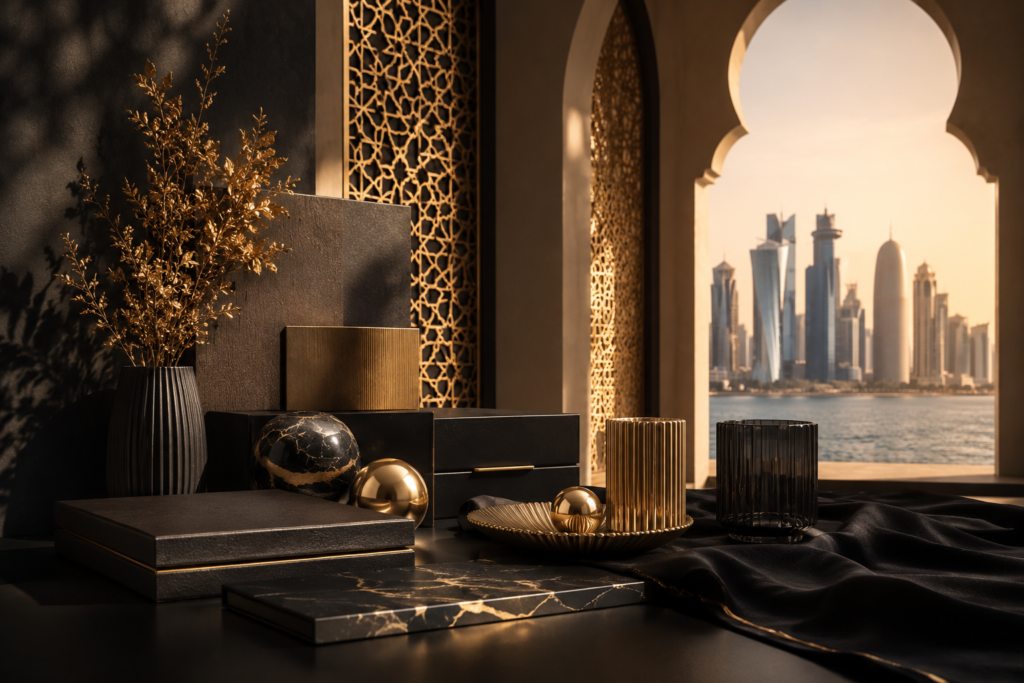
Luxury Brand Identity Design: Define Elegance, Prestige, and Brand Value at Signature Bayt is about creating a brand presence that reflects the same level of sophistication, precision, and refinement found in its interior design work. More than an attractive logo or premium colour palette, the brand identity should communicate what Signature Bayt stands for—elegant spaces, thoughtful design, quality execution, and a distinctive approach to modern luxury in Qatar.
For Signature Bayt, every visual and verbal touchpoint should work together consistently. The logo, typography, colour palette, website, social media, photography, project presentation, proposals, signage, and client communication should all reinforce a premium and recognizable identity. Therefore, strong luxury brand identity design helps Signature Bayt present its residential, commercial, and turnkey interior services with greater clarity, confidence, and visual consistency.
A luxury brand should feel intentional at every stage. For Signature Bayt, that means building an identity around prestige, trust, craftsmanship, exclusivity, elegance, and long-term brand value rather than relying on decorative luxury alone. As a result, the brand can create a stronger connection between its visual identity and the refined interior experiences it delivers..
What Is Luxury Brand Identity Design?
Luxury brand identity design is the process of creating a distinctive visual and strategic identity for a premium or high-end brand.
It usually includes:
- Brand strategy
- Logo design
- Typography
- Colour palette
- Visual language
- Packaging
- Photography direction
- Brand guidelines
- Tone of voice
- Digital brand presentation
The purpose is to create a brand that feels consistent across every customer interaction.
A luxury identity should not simply look beautiful. It should also explain who the brand is, what it represents, and why it deserves premium positioning.
Why Luxury Branding Is Different from Regular Branding
Luxury branding often depends on perception, emotion, and experience more strongly than mass-market branding.
Customers are not only buying a product or service. They may also be buying status, craftsmanship, exclusivity, heritage, confidence, or aspiration.
Therefore, premium brands need a stronger sense of identity.
| Brand Element | Regular Branding Focus | Luxury Branding Focus |
|---|---|---|
| Logo | Recognition | Distinction and prestige |
| Colour | Visibility | Emotion and refinement |
| Typography | Readability | Personality and elegance |
| Packaging | Function | Experience and perceived value |
| Messaging | Information | Story, aspiration, and positioning |
| Photography | Product presentation | Mood and lifestyle |
This difference is important because luxury branding should create value before the customer makes a purchase.
Build a Clear Luxury Brand Position
Before designing the visual identity, define what the brand should represent.
A premium brand needs clarity around its audience, values, personality, competitive position, and promise.
Ask questions such as:
- Who is the ideal customer?
- What makes the brand different?
- Why should customers perceive it as premium?
- What emotions should the brand create?
- Which values should remain consistent over time?
Without this foundation, even a beautiful identity can feel generic.
Define the Brand Personality Before the Visual Style
A luxury brand may feel elegant, bold, heritage-led, minimalist, artistic, exclusive, modern, or highly crafted.
The personality should guide the design.
For example, a heritage luxury brand may use classic typography and restrained colours. Meanwhile, a contemporary premium brand might use minimal layouts, sharp typography, and editorial photography.
Therefore, the visual system should reflect the brand personality rather than follow trends alone.
Create a Distinctive Luxury Logo
The logo is often the most recognizable part of a brand identity.
However, a strong luxury logo design should remain simple enough to be memorable and distinctive enough to feel unique.
A premium logo may use:
- Refined typography
- Custom lettering
- Monograms
- Elegant symbols
- Minimal geometry
- Carefully balanced spacing
The goal is not to make the logo overly complicated.
Instead, it should work equally well on packaging, signage, websites, social media, stationery, and small digital formats.
Use Typography to Communicate Prestige
Typography can strongly influence how a luxury brand is perceived.
Serif fonts often create a sense of heritage, sophistication, and editorial elegance. Meanwhile, clean sans-serif fonts can support modern, minimalist luxury.
Some brands combine both.
For example, a refined serif may be used for headlines while a simple sans-serif supports body text.
This contrast can create hierarchy while keeping the identity sophisticated.
Choose a Luxury Colour Palette with Purpose
Colour should support brand positioning rather than simply look attractive.
Classic luxury palettes often include:
- Black
- Ivory
- Cream
- Deep green
- Navy
- Burgundy
- Gold
- Bronze
- Muted neutrals
However, a luxury brand does not need to use black and gold to appear premium.
The strongest palette is the one that supports the brand personality and differentiates it from competitors.
Create Visual Consistency Across Every Touchpoint
Luxury is often communicated through consistency.
A customer should recognize the same brand feeling across the website, packaging, business cards, social media, signage, printed materials, and advertising.
Therefore, a complete visual identity system should define how colours, logos, typography, photography, icons, and layouts are used.
Consistency helps build recognition and trust.
Use Packaging to Increase Perceived Brand Value
For product-based brands, luxury packaging design can become a major part of the customer experience.
The packaging may be the first physical interaction a customer has with the brand.
Therefore, details such as material, texture, finishing, typography, opening experience, and presentation can influence perceived quality.
Premium packaging may use:
- Embossing
- Foil details
- Textured paper
- Rigid boxes
- Custom inserts
- Minimal layouts
- High-quality printing
However, the packaging should still feel connected to the core brand identity.
Develop a Strong Luxury Brand Voice
Visual design is only one part of branding.
The way the brand communicates also affects perception.
A premium brand voice is usually clear, confident, controlled, and distinctive.
It should avoid exaggerated claims and unnecessary language.
Instead, messaging should focus on:
- Craftsmanship
- Quality
- Heritage
- Experience
- Design
- Exclusivity
- Service
- Brand philosophy
As a result, the brand feels more credible and intentional.
Use Storytelling to Build Emotional Value
Luxury brands often become more memorable when they have a clear story.
The story may focus on craftsmanship, origin, design philosophy, founder vision, materials, cultural inspiration, or a unique point of view.
However, storytelling should be genuine.
Customers are more likely to trust a brand when the story is connected to real values and practices.
Therefore, luxury brand storytelling should support brand positioning rather than act as decoration.
Create Premium Photography and Art Direction
Photography influences luxury perception very quickly.
Poor imagery can weaken even a strong logo and website.
Therefore, premium brands need consistent visual direction.
Photography may focus on:
- Detail
- Texture
- Craftsmanship
- Lifestyle
- Atmosphere
- Materials
- Product quality
Lighting, composition, styling, and colour grading should all support the same visual identity.
Design a Luxury Website That Reflects the Brand
A premium brand website should feel as refined as the physical brand experience.
That does not mean adding excessive animations or decorative effects.
Instead, luxury website design often works best with:
- Strong typography
- High-quality photography
- Clean navigation
- Generous spacing
- Consistent colours
- Clear messaging
- Smooth user experience
The website should communicate quality while remaining easy to use.
Balance Minimalism with Personality
Minimalism is common in luxury branding, but it should not make every brand look identical.
Removing unnecessary elements can create clarity. However, the identity still needs distinctive features.
These may include custom typography, unique photography, signature colours, editorial layouts, or a recognizable graphic system.
Therefore, the goal is refined simplicity, not visual emptiness.
Build Recognition Through Consistent Brand Assets
Recognition develops when customers repeatedly see the same visual and verbal cues.
A complete luxury identity may include:
- Primary logo
- Secondary logo
- Monogram
- Colour system
- Typography
- Iconography
- Photography style
- Packaging rules
- Social media templates
- Brand guidelines
These assets should work together instead of appearing as separate designs.
Avoid Common Luxury Brand Identity Mistakes
Luxury branding can lose credibility when visual decisions are inconsistent or excessive.
Common mistakes include copying competitors, overusing gold, choosing decorative fonts that reduce readability, using generic stock photography, or changing the visual style across platforms.
Another mistake is focusing only on appearance without defining the brand strategy first.
A premium identity should feel intentional, not artificially luxurious.
Create Luxury Without Looking Excessive
More decoration does not always mean more luxury.
In fact, premium brands often communicate quality through restraint.
Strong typography, balanced spacing, excellent materials, controlled colours, and consistent photography can create more impact than excessive visual effects.
Therefore, luxury should come from quality, detail, and confidence.
Build Brand Value Through Consistency and Trust
A strong identity contributes to long-term brand value.
When customers repeatedly experience the same level of quality across design, communication, service, and product presentation, the brand becomes easier to trust.
That trust can strengthen recognition, loyalty, and premium positioning.
Therefore, brand identity design should be considered a long-term business asset rather than a one-time visual project.
Why Professional Luxury Brand Identity Design Matters
A premium brand needs more than attractive individual assets.
It needs a system.
Professional luxury branding connects strategy, visual design, messaging, and customer experience.
This makes it easier for the brand to grow while maintaining a consistent image.
It also helps different teams, designers, marketers, and suppliers understand how the brand should appear.
Define Elegance, Prestige, and Brand Value
The strongest luxury brand identity design creates a recognizable feeling across every interaction.
It combines a clear brand strategy with refined typography, distinctive colours, consistent imagery, thoughtful packaging, strong messaging, and a premium digital presence.
Ultimately, luxury is not created by decoration alone. It is created when every detail feels intentional.
A brand that communicates quality, exclusivity, trust, and sophistication consistently is more likely to build lasting recognition and stronger perceived value.
Frequently Asked Questions About Luxury Brand Identity Design
1. What does luxury brand identity design mean for Signature Bayt?
For Signature Bayt, luxury brand identity design means creating a refined and consistent brand image that reflects its focus on premium interior design, thoughtful space planning, quality execution, and elegant design solutions in Qatar.
2. What makes Signature Bayt’s brand identity feel luxurious?
The luxury feel comes from a combination of refined visual design, consistent branding, elegant typography, controlled colours, premium project imagery, and clear positioning. Together, these elements help communicate sophistication rather than decorative excess.
3. Is the Signature Bayt logo enough to build a luxury brand?
No. The logo is only one part of the identity. Signature Bayt also needs consistent typography, colours, photography, website design, social media presentation, proposals, signage, project visuals, and client communication to create a complete luxury brand experience.
4. Which colours support Signature Bayt’s luxury brand identity?
Elegant neutrals, black, charcoal, ivory, cream, bronze, gold, and other refined tones can support the premium positioning of Signature Bayt. However, the most important factor is using the chosen palette consistently across every brand touchpoint.
5. Why is typography important for Signature Bayt?
Typography helps communicate the personality of the brand. Carefully selected fonts can make Signature Bayt feel more refined, modern, confident, and premium while also improving readability across its website, presentations, social media, and printed materials.
6. How can project presentations strengthen Signature Bayt’s brand value?
Well-designed project presentations can reinforce the brand by showing interiors, materials, layouts, and completed spaces in a consistent visual style. High-quality photography, clean layouts, and polished presentation can help Signature Bayt communicate its design quality more effectively.
7. What makes luxury branding different for an interior design company like Signature Bayt?
For Signature Bayt, luxury branding needs to reflect the quality of the spaces it creates. Therefore, the brand should communicate craftsmanship, design expertise, attention to detail, exclusivity, client experience, and refined execution across both residential and commercial projects.
8. Does Signature Bayt need a minimalist brand identity?
Not necessarily. Minimalism can support a premium image, but the identity should still feel distinctive. Signature Bayt can combine clean layouts with elegant details, strong project imagery, refined typography, and signature colours to create a recognizable luxury presence.
9. Why are brand guidelines important for Signature Bayt?
Brand guidelines help ensure that the logo, colours, typography, photography, tone of voice, and visual layouts remain consistent across the website, social media, proposals, signage, presentations, and marketing materials. This consistency strengthens recognition and trust.
10. How can luxury brand identity design increase the value of Signature Bayt?
A strong luxury brand identity design can help Signature Bayt build greater recognition, credibility, trust, and perceived quality. Over time, consistent branding can support stronger market positioning and reinforce the connection between the brand and the premium interior experiences it delivers.
To learn more, please visit@Signature Bayt.