

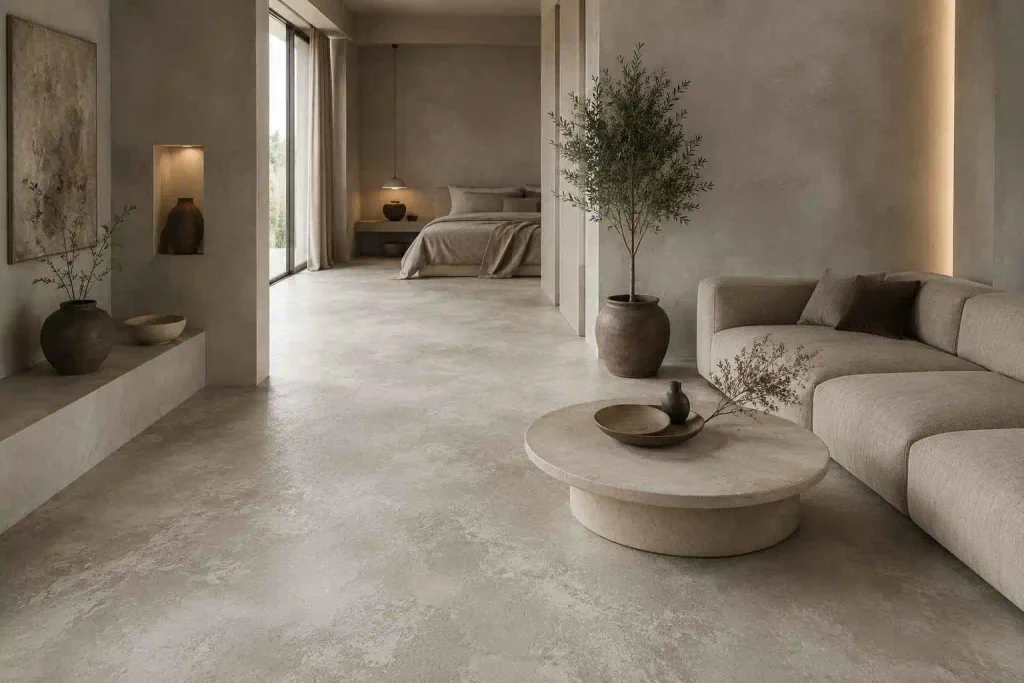
Seamless Contemporary Appearance has become an increasingly attractive design direction for modern interiors because it creates a clean, connected, and sophisticated visual effect. By using luxury microcement solutions, homeowners and property developers can transform selected walls, floors, kitchens, bathrooms, and feature areas into surfaces that feel visually continuous rather than divided by numerous joints or patterns. This approach allows the architecture itself to become part of the design.
Modern interior design increasingly focuses on simplicity, proportion, texture, and carefully selected materials. Therefore, microcement provides an interesting option for people who want to move beyond conventional tiled finishes while maintaining a refined appearance. Designers can coordinate microcement finishes with natural wood, stone, glass, metal, modern furniture, and architectural lighting. As a result, the interior can achieve a balanced combination of contemporary character and luxury.
Furthermore, a seamless design does not mean that every surface needs to look exactly the same. Instead, professionals can strategically apply microcement to selected areas and combine different textures, colours, and materials to establish visual hierarchy. A warm neutral wall, for example, can complement darker cabinetry, while a continuous floor can connect an open-plan kitchen with an adjacent living or dining area.
Signature Bayt provides customised interior finishing solutions that can be planned around the character and requirements of each property. From design consultation and surface assessment to material selection, application, and final finishing, the process requires careful coordination. This guide explains how Seamless Contemporary Appearance works with microcement, where it can be applied, which styles are popular, what benefits it offers, and what you should consider before choosing a microcement specialist.
What Is a Seamless Contemporary Appearance in Interior Design?
A Seamless Contemporary Appearance describes an interior style that minimises visual interruptions and creates a smooth relationship between architectural surfaces. Instead of relying heavily on contrasting patterns, visible joints, or disconnected finishes, designers create continuity through materials, colours, proportions, and carefully planned transitions.
Understanding Seamless Interior Design
Seamless interior design focuses on creating visual flow between different parts of a space. Designers can achieve this effect by coordinating flooring, walls, cabinetry, lighting, furniture, and architectural features.
How Continuous Surfaces Create a Modern Visual Effect
Continuous surfaces reduce strong visual breaks and allow the eye to move more naturally through the room. Consequently, the interior can appear more organised, spacious, and architecturally refined.
Why Seamless Finishes Make Interiors Look More Refined
Seamless finishes create a controlled visual language. When professionals coordinate the finish with furniture and architectural elements, the result can look elegant without relying on excessive decoration.
The Role of Microcement in Contemporary Interiors
Microcement can support contemporary interiors because professionals can apply it in thin layers to appropriately prepared surfaces and customise the visual result through colour, texture, and finishing techniques.
How Microcement Creates Continuous Surface Finishes
Unlike traditional tiled designs that visibly divide a surface into individual units, microcement can create a more continuous visual finish. This makes it suitable for design concepts that emphasise simplicity and material continuity.
Combining Microcement with Modern Architectural Elements
Designers can combine microcement with natural wood, stone, metal, glass, modern lighting, and built-in furniture. Therefore, the material can become one component of a complete interior design rather than the only visual feature.
How Microcement Creates a Seamless Contemporary Appearance
Microcement contributes to a Seamless Contemporary Appearance by allowing professionals to create coordinated finishes across selected surfaces. However, the final effect depends on proper substrate preparation, application technique, colour selection, texture, and protective finishing.
Creating Continuous Walls and Floors
Applying coordinated microcement finishes to walls and floors can create stronger visual continuity. This approach works especially well in open-plan interiors where multiple areas are visible from the same viewpoint.
Reducing Visible Joints and Surface Breaks
Microcement can minimise the visual division created by traditional tiled patterns. As a result, the surface can appear calmer and more continuous.
Creating Clean and Consistent Architectural Lines
When professionals carefully coordinate edges, corners, transitions, and adjoining surfaces, they can reinforce the clean architectural character of a modern interior.
Using Microcement for Minimalist Interior Design
Minimalist interiors rely on simplicity, proportion, functionality, and controlled material selection. Microcement fits this approach by providing a relatively understated surface that allows furniture, lighting, and architectural forms to remain visually important.
Simplifying Interior Surfaces Through Seamless Finishes
Continuous surfaces can reduce visual clutter and create a more unified appearance. Therefore, designers can use microcement to establish a calm foundation for contemporary interiors.
Creating a Calm and Visually Connected Environment
When the finish, furniture, and lighting work together, the interior can feel more connected. This approach also allows selected architectural features to stand out without overwhelming the space.
Luxury Microcement Solutions for Modern Homes
Modern homes require finishes that complement both their architecture and everyday lifestyle. Luxury microcement solutions can adapt to villas, apartments, family homes, and renovation projects when professionals select the appropriate application and finish for each surface.
| Property Type | Potential Microcement Approach | Design Objective |
|---|---|---|
| Luxury Villas | Bespoke walls, floors, and feature areas | Sophisticated architectural appearance |
| Apartments | Coordinated seamless surfaces | Visually connected interiors |
| Family Homes | Practical decorative finishes | Balanced style and functionality |
| Renovations | Selected existing surfaces | Modernise the interior concept |
Microcement Solutions for Luxury Villas
Luxury villas often provide opportunities for larger-scale material coordination. Professionals can integrate microcement with architectural features, custom furniture, premium lighting, natural stone, and wood to create a sophisticated interior.
Designing Sophisticated Villa Interiors
Villa interiors can use microcement strategically rather than covering every surface. A feature wall, connected floor area, or selected bathroom surface can create a strong focal point while maintaining balance.
Coordinating Microcement with Premium Furniture and Lighting
Furniture and lighting influence how microcement appears. Therefore, designers should evaluate colour, texture, lighting direction, furniture profiles, and surrounding materials before finalising the finish.
Microcement Solutions for Apartments
Apartments often benefit from visually connected surfaces because excessive material changes can make compact rooms feel busy. Microcement can provide a simple foundation for modern apartment interiors.
Creating Visually Spacious Interior Areas
Coordinating colours and finishes across adjoining areas can create stronger visual flow. Light or warm neutral tones can also complement modern cabinetry and furniture.
Connecting Open-Plan Living and Dining Spaces
In open-plan apartments, a continuous floor or coordinated wall finish can visually connect the kitchen, dining, and living zones while still allowing furniture to define each area.
Microcement for Home Renovation Projects
Renovation projects can use microcement to introduce a contemporary material without necessarily redesigning every element. Professionals can assess suitable existing surfaces and determine where the new finish can contribute most effectively.
Updating Existing Interior Surfaces
Depending on the substrate and its condition, professionals can prepare selected areas for a new decorative microcement finish. They should assess the surface carefully before choosing the appropriate application method.
Combining New Microcement Finishes with Existing Features
Microcement can complement existing cabinetry, furniture, lighting, and architectural elements when designers carefully coordinate colours and textures.
Where Can Microcement Create a Seamless Contemporary Appearance?
Microcement can contribute to a Seamless Contemporary Appearance across several interior applications. Nevertheless, each surface requires individual assessment because substrate condition, exposure, intended use, and finishing requirements can differ.
| Application | Design Opportunity |
|---|---|
| Walls | Feature walls and continuous backgrounds |
| Floors | Connected and contemporary floor surfaces |
| Kitchens | Walls, floors, splashbacks, and selected features |
| Bathrooms | Coordinated wall and floor finishes |
| Commercial Areas | Modern hospitality and business interiors |
Microcement Walls
Microcement walls can create a sophisticated backdrop for contemporary interiors. Designers can use them behind furniture, within reception areas, around dining spaces, or as architectural feature walls.
Creating Modern Feature Walls
A carefully selected microcement wall can become a subtle focal point. Instead of relying on complex patterns, the designer can use texture and tone to create visual interest.
Matching Wall Finishes with Furniture and Lighting
Furniture placement and lighting can dramatically influence a wall’s appearance. Therefore, professionals should consider these elements when selecting the final microcement finish.
Microcement Flooring
Microcement flooring can help create a continuous visual foundation throughout selected interior areas. It can work especially well in open-plan layouts where different rooms visually connect.
Designing Continuous Floor Surfaces
A continuous floor finish can reduce the visual interruption created by multiple flooring patterns. Consequently, the interior can appear more unified.
Connecting Different Interior Zones with One Visual Finish
Designers can use one coordinated finish to connect living, dining, kitchen, or circulation areas while furniture and lighting establish individual zones.
Microcement Kitchens
Microcement can complement contemporary kitchens through selected wall, floor, splashback, or feature applications. Its visual continuity can work particularly well with modern cabinetry and minimalist layouts.
Creating Seamless Kitchen Walls and Floors
Coordinating kitchen walls and floors can establish a consistent design language. However, professionals should select the appropriate system for each intended application.
Coordinating Microcement with Cabinets and Worktops
To create a cohesive result, coordinate the microcement colour and texture with cabinet colours, worktops, flooring, handles, lighting, and other visible materials.
Microcement Bathrooms
Bathrooms can use microcement to create a visually connected design across suitable walls and floors. The finish can complement modern sanitaryware, mirrors, lighting, wood, stone, and metal fixtures.
Creating Continuous Bathroom Surfaces
Continuous surfaces can create a clean bathroom aesthetic by reducing strong visual divisions between selected areas.
Combining Microcement with Modern Bathroom Fixtures
Matte fixtures, glass screens, natural wood details, mirrors, and modern lighting can complement the understated character of microcement.
Popular Microcement Styles for Contemporary Interiors
Microcement can support different interior styles because professionals can adapt colour, texture, and finish to the surrounding design. The most suitable approach depends on the property’s architecture and the desired atmosphere.
- Minimalist microcement design for clean and calm interiors.
- Luxury microcement interiors for sophisticated spaces.
- Industrial-inspired microcement for architectural character.
- Warm contemporary microcement for comfortable residential interiors.
Minimalist Microcement Design
Minimalist microcement design focuses on simplicity and controlled material selection. Neutral finishes allow architecture, furniture, and lighting to remain the primary visual elements.
Using Neutral Colours and Clean Lines
Soft grey, beige, taupe, sand, and other restrained colours can create a sophisticated foundation for minimalist interiors.
Creating Simple Yet Elegant Interior Spaces
Simple surfaces do not have to look plain. Through careful texture, lighting, furniture selection, and proportion, designers can create a refined atmosphere.
Luxury Microcement Interior Design
Luxury microcement interiors combine subtle surface character with premium architectural details. The material can act as a sophisticated background for high-quality furniture and decorative elements.
Combining Microcement with Premium Materials
Natural stone, timber, glass, brushed metal, and carefully selected fabrics can create contrast against a continuous microcement surface.
Creating Sophisticated and High-End Interior Details
Luxury often comes from coordination rather than excessive decoration. Therefore, subtle textures and precise detailing can produce a premium visual result.
Industrial-Inspired Microcement Interiors
Industrial-inspired interiors often use concrete-like textures, darker tones, metal details, and simple architectural forms. Microcement can reinforce this visual direction while allowing designers to maintain a more polished appearance.
Creating Concrete-Inspired Surface Effects
Grey and textured finishes can create an architectural effect inspired by raw concrete while offering more opportunities for colour and decorative customisation.
Warm Contemporary Microcement Design
Warm contemporary interiors combine modern architectural simplicity with comfortable colours and natural materials. Microcement can support this style through warm neutral finishes.
Using Beige, Taupe, Sand, and Warm Grey Tones
Warm neutral tones can create a softer atmosphere and coordinate naturally with wood, stone, and warm lighting.
Creating Comfortable and Elegant Living Spaces
By combining understated microcement with comfortable furniture and natural textures, designers can create interiors that feel both contemporary and welcoming.
Premium Microcement Colours, Textures, and Finishes
The colour, texture, and final finish strongly influence the character of a microcement interior. Therefore, professionals should evaluate the entire room before choosing the surface appearance.
Choosing the Right Microcement Colour
Colour selection should consider natural light, artificial lighting, furniture, cabinetry, flooring, and the desired atmosphere. A colour that looks subtle in one room may appear very different under another lighting arrangement.
Selecting Colours Based on Natural and Artificial Lighting
Professionals can review how daylight and artificial lighting interact with the selected finish. This approach helps create a more predictable visual result.
Matching Microcement Colours with the Existing Interior Palette
Coordinate the microcement with the existing colour palette rather than selecting the finish in isolation. This creates stronger visual harmony throughout the room.
Exploring Microcement Textures
Texture gives microcement its distinctive visual character. Depending on the selected system and application technique, designers can create smooth, matte, subtly textured, or decorative effects.
Smooth, Matte, and Textured Surface Options
Smooth finishes can support minimalist interiors, while more visible textures can create architectural interest. Matte finishes can provide a restrained appearance that works well with contemporary furniture.
Selecting the Right Texture for Different Interior Styles
Choose texture according to the property’s design language. Minimalist spaces may benefit from subtle surfaces, whereas industrial-inspired interiors may suit stronger texture.
Decorative Microcement Finishes
Decorative finishes can introduce visual depth without relying on traditional patterns. Professionals can select an appearance that supports the architecture and complements surrounding materials.
Creating Subtle and Natural Surface Variations
Subtle variation can make a surface feel more natural and visually interesting while maintaining the overall contemporary character.
Developing a Bespoke Contemporary Appearance
By combining colour, texture, application technique, and surrounding materials, professionals can develop a bespoke contemporary microcement appearance for each project.
Signature Bayt Approach to Creating Seamless Contemporary Interiors
Signature Bayt approaches microcement projects by considering design requirements and surface conditions together. A successful finish depends on proper planning, appropriate preparation, careful application, and suitable final finishing.
- Initial consultation to understand the project vision.
- Surface assessment to evaluate existing conditions.
- Material selection based on the intended application.
- Detailed application across prepared surfaces.
- Final finishing and inspection before completion.
Initial Consultation and Design Planning
The project starts by understanding the client’s design preferences, property type, layout, preferred colours, intended surfaces, and overall interior vision.
Understanding the Client’s Interior Vision
Understanding the desired atmosphere helps professionals determine whether the project should follow a minimalist, luxury, industrial, warm contemporary, or another design direction.
Selecting Colours, Textures, and Application Areas
Professionals can then coordinate colours, textures, and application areas with cabinetry, furniture, lighting, flooring, and architectural details.
Surface Assessment and Preparation
Before applying microcement, professionals should assess the existing substrate and prepare it according to the requirements of the selected system. Proper preparation provides the foundation for the finishing process.
Evaluating Existing Walls, Floors, and Surfaces
The team should examine the existing material, surface condition, level, suitability, and intended application area before proceeding.
Preparing the Substrate for Microcement Application
Proper preparation creates a suitable base for the subsequent microcement layers. The exact preparation method depends on the existing substrate and selected system.
Professional Microcement Application
Professionals apply microcement through a controlled sequence based on the selected system. Each stage contributes to the final texture, appearance, and surface quality.
Applying Microcement in Controlled Layers
Careful application helps create a consistent surface across larger areas. Professionals must pay attention to the application technique and required drying or curing stages.
Maintaining Consistent Texture and Surface Quality
Consistency becomes especially important across large walls, floors, corners, edges, and transitions. Skilled application can help maintain the intended visual character.
Final Finishing and Quality Inspection
After the decorative application, professionals complete the required finishing stages and review the surface. This final step helps ensure that the completed area matches the agreed design direction.
Reviewing Edges, Corners, and Surface Transitions
Edges, corners, transitions, and junctions deserve particular attention because these details can influence the overall quality of a seamless design.
Completing the Seamless Contemporary Appearance
The final inspection brings together the colour, texture, surface continuity, architectural details, and surrounding materials to complete the intended contemporary appearance.
Benefits of a Seamless Contemporary Appearance
A Seamless Contemporary Appearance can provide both aesthetic and design benefits. When professionals apply microcement appropriately, the finish can support modern architecture while allowing other interior elements to remain visually balanced.
- Creates a clean modern appearance.
- Reduces strong visual interruptions.
- Supports custom colours and textures.
- Connects selected interior areas.
- Works with different design styles.
- Complements wood, stone, metal, and glass.
Creates a Clean and Modern Interior
Continuous surfaces can simplify the visual composition of a room. As a result, the interior can appear more organised and contemporary.
Reducing Unnecessary Visual Distractions
By reducing competing patterns and visible divisions, microcement can create a calmer background for furniture, lighting, and architectural features.
Creating a More Refined Architectural Look
The continuous character of microcement can emphasise architectural proportions and clean lines, particularly in contemporary interiors.
Supports Flexible Interior Design
Microcement can complement different materials and styles. Therefore, designers can adapt the finish to the property’s existing or planned interior concept.
Combining Microcement with Different Materials
Wood adds warmth, stone adds natural texture, metal introduces contrast, and glass creates lightness. Microcement can connect these different materials through a consistent surface language.
Adapting the Finish to Different Design Concepts
Through colour and texture selection, the same general material can support minimalist, luxury, industrial, and warm contemporary interiors.
Creates Visual Continuity
Visual continuity can help connect different areas within an open-plan property. A coordinated finish can create a stronger relationship between adjacent rooms.
Connecting Walls, Floors, and Feature Areas
Designers can strategically repeat a colour or finish across selected areas to create a consistent interior language.
Building a Unified Interior Design Language
When surfaces share compatible colours, textures, and proportions, the interior can feel more deliberately designed.
Complements Modern Furniture and Architecture
Microcement can provide a restrained backdrop that allows furniture and architectural details to remain prominent.
Pairing Microcement with Wood, Stone, Metal, and Glass
Combining contrasting materials can add depth without sacrificing visual continuity. Therefore, designers can use microcement as a connecting element between different textures.
Creating Balanced Contemporary Interiors
The strongest results usually come from balance. A restrained microcement finish can provide the foundation while furniture, lighting, and natural materials add character.
Microcement Solutions for Commercial and Hospitality Interiors
Commercial and hospitality properties can also use microcement interior solutions to create contemporary environments. Restaurants, cafés, hotels, offices, and other commercial spaces can use coordinated surfaces to reinforce their interior identity.
| Property | Potential Application | Design Objective |
|---|---|---|
| Restaurants | Feature walls and selected floor areas | Modern customer-facing atmosphere |
| Cafés | Decorative walls and selected surfaces | Contemporary visual identity |
| Hotels | Hospitality and guest-facing areas | Premium interior consistency |
| Offices | Reception, pantry, and common areas | Clean business environment |
Microcement for Restaurants and Cafés
Restaurants and cafés often use interior design to establish a memorable atmosphere. Microcement can contribute to this environment through feature walls, floors, counters, and selected decorative surfaces where the system is appropriate.
Creating Contemporary Customer-Facing Areas
A carefully designed microcement finish can complement seating, lighting, tables, counters, and other visible architectural elements.
Coordinating Microcement with Furniture and Brand Identity
Colour and texture should support the business’s interior identity. Therefore, designers should consider furniture, lighting, signage, and branding when selecting the finish.
Microcement for Hotels and Hospitality Spaces
Hotels can use microcement to create a consistent contemporary design language across selected areas. The finish can complement premium furniture, natural materials, lighting, and architectural features.
Creating Premium and Consistent Interior Finishes
Coordinated surfaces can help create visual consistency across reception spaces, corridors, dining areas, and other appropriate locations.
Developing a Cohesive Hospitality Design
A consistent material palette can help guests experience a connected visual identity throughout selected areas of a hospitality property.
Microcement for Offices and Commercial Properties
Modern offices increasingly use design to create professional yet comfortable environments. Microcement can support this approach in reception areas, meeting spaces, pantries, and selected common areas.
Designing Modern Reception and Common Areas
A refined microcement feature wall can create a strong first impression while maintaining a clean architectural aesthetic.
Creating Clean and Contemporary Business Interiors
Neutral colours and controlled textures can create a professional background that works with modern office furniture and lighting.
Latest Microcement Interior Design Trends
Contemporary interiors increasingly favour warm neutral colours, natural materials, simple architectural forms, integrated furniture, and continuous surfaces. Consequently, microcement can fit naturally into several current interior design directions.
- Warm neutral microcement finishes.
- Microcement combined with natural wood.
- Microcement paired with stone and metal.
- Minimalist seamless interiors.
- Integrated contemporary design.
Warm Neutral Microcement Finishes
Warm neutral tones can create softer and more welcoming interiors while maintaining contemporary simplicity.
Beige, Taupe, Sand, and Earth-Inspired Colours
These tones can coordinate effectively with timber, stone, cream furniture, dark cabinetry, and warm lighting.
Creating Soft and Sophisticated Interior Spaces
Warm finishes can soften the architectural character of microcement while preserving its contemporary visual identity.
Microcement Combined with Natural Materials
Combining microcement with natural materials creates contrast and depth. Wood and stone can add tactile variation while microcement provides visual continuity.
Pairing Microcement with Wood and Stone
Timber cabinetry, natural stone worktops, and microcement walls can create a balanced combination of modern and organic materials.
Creating Contrast Through Different Textures
Contrasting textures can make an interior more dynamic while maintaining a consistent colour palette.
Minimalist Seamless Interiors
Minimalist design continues to emphasise clean lines, simple forms, and carefully selected materials. Microcement supports this approach through its continuous visual character.
Using Continuous Surfaces and Simple Forms
Continuous walls and floors can create a calm foundation for streamlined furniture and built-in architectural features.
Creating Elegant Spaces Without Visual Clutter
By limiting unnecessary patterns and coordinating the main surfaces, designers can create elegant interiors with a controlled visual rhythm.
Integrated Contemporary Interior Design
Integrated interiors connect architecture, furniture, storage, lighting, and surface finishes. Microcement can provide a consistent background for these interconnected elements.
Combining Microcement with Built-In Furniture
Built-in storage can sit naturally against a continuous microcement wall, creating a cleaner relationship between furniture and architecture.
Creating Connected Architectural Elements
When designers coordinate surfaces, storage, lighting, and furniture, they can create a more unified contemporary environment.
Maintaining a Seamless Microcement Interior
Proper care helps maintain the appearance of a finished microcement surface. Cleaning requirements can vary according to the selected material and protective system, so property owners should follow the specific maintenance guidance provided for their installation.
- Use cleaning products recommended for the installed system.
- Avoid unsuitable abrasive cleaning methods.
- Clean spills and surface residue regularly.
- Follow professional maintenance recommendations.
- Address surface concerns with appropriate professional guidance.
Everyday Cleaning and Surface Care
Regular, appropriate cleaning can help preserve the appearance of the finish. However, property owners should always consider the specific protective treatment used on the surface.
Choosing Suitable Cleaning Methods
Use cleaning methods that suit the installed microcement system and its protective coating. Avoid applying unfamiliar chemicals without checking their suitability.
Avoiding Unsuitable Abrasive Treatments
Abrasive products or aggressive cleaning methods may not suit every finish. Therefore, follow the care instructions supplied for the specific installation.
Protecting Microcement Finishes
The protective finishing system forms an important part of the overall surface solution. Appropriate maintenance helps preserve the intended appearance.
Following Recommended Maintenance Practices
Follow the installation and maintenance recommendations associated with the selected microcement system rather than using generic treatments.
Preserving the Original Surface Appearance
Consistent care can help the surface retain the clean, contemporary character that attracted you to microcement in the first place.
Cost Factors for Creating a Seamless Microcement Interior
The cost of a microcement project depends on several factors rather than one fixed rate. Surface area, existing substrate condition, application areas, preparation requirements, finish selection, and design complexity can all influence the overall project scope.
| Cost Factor | Potential Influence |
|---|---|
| Surface Area | Larger areas require more material and labour. |
| Existing Surface | Additional preparation may be necessary. |
| Application Areas | Walls, floors, bathrooms, and features may differ in requirements. |
| Finish Selection | Custom finishes can require additional planning. |
| Design Complexity | Detailed transitions and multiple finishes can increase project work. |
What Influences Microcement Project Costs?
Professionals should assess the project before providing a meaningful scope. Consequently, comparing projects only by surface area may not provide a complete picture.
Surface Area and Existing Surface Condition
Larger areas naturally require more application work, while surfaces that require additional preparation can increase the overall project requirements.
Understanding Preparation and Application Requirements
Understanding the substrate and intended finish helps establish a more accurate project scope before installation begins.
Material, Finish, and Design Complexity
Custom colours, textures, multiple application areas, detailed edges, and specific finishing requirements can affect the amount of work involved.
How Custom Finishes Affect Project Requirements
More customised finishes may require additional sample selection, planning, application attention, and finishing work.
Planning the Project According to Your Interior Goals
Define the desired style, surfaces, colour, texture, and final appearance before starting. This helps professionals plan the work more effectively.
Important Factors Before Choosing a Microcement Company
Choosing the right microcement company requires more than reviewing attractive photographs. You should also evaluate experience, surface preparation, material knowledge, application quality, finishing methods, communication, and customisation capabilities.
| Factor | What to Check |
|---|---|
| Experience | Previous microcement projects and application experience |
| Preparation | How existing surfaces are assessed and prepared |
| Materials | Suitability of the selected system |
| Customisation | Available colours, textures, and finishes |
| Finishing | Protective treatment and final quality inspection |
Review Previous Microcement Projects
Previous projects provide useful insight into a company’s ability to handle different property types, surface conditions, colours, textures, and design styles.
Evaluating Surface Quality and Design Variety
Look closely at large surfaces, corners, edges, transitions, colour consistency, and finishing details rather than focusing only on the overall photograph.
Looking for Consistent Finishing and Attention to Detail
Detailed workmanship becomes especially important when the design relies on large continuous surfaces.
Check Material and Installation Expertise
Ask which microcement system the company proposes and why it suits the intended application. This helps you understand the technical approach behind the decorative finish.
Understanding Surface Preparation Methods
Ask how professionals will inspect and prepare the existing surface before application. Proper preparation is an important part of the overall installation process.
Asking About Application and Protective Finishing
Understanding the application sequence and final protective finish can help you make a more informed decision.
Consider Custom Design Capabilities
If your goal is a bespoke interior, choose a company that can discuss colours, textures, surface applications, transitions, and how the microcement will interact with other materials.
Discussing Colours, Textures, and Application Areas
Discuss your preferred colours, textures, rooms, surface areas, furniture, lighting, and overall interior direction before finalising the project.
Ensuring the Company Understands Your Interior Vision
Clear communication allows the installation team to understand the intended appearance and plan the work accordingly.
Why Choose Signature Bayt for Luxury Microcement Solutions?
Signature Bayt focuses on creating customised interior finishing solutions around the requirements of each project. Rather than treating microcement as a standalone decorative material, the approach considers how the finish works with architecture, furniture, lighting, cabinetry, flooring, and other interior elements.
- Customised interior finishing concepts.
- Attention to surface preparation.
- Coordinated colour and texture selection.
- Detailed application and finishing.
- Design solutions for residential and commercial spaces.
Furthermore, the design process can be adapted according to the property type, intended application, and desired style. Whether you prefer minimalist surfaces, warm contemporary tones, concrete-inspired textures, or a more luxurious interior direction, careful planning can help create a cohesive result.
Conclusion: Create a Seamless Contemporary Appearance with Signature Bayt
Seamless Contemporary Appearance offers a sophisticated way to approach modern interior design. By reducing visual interruptions and coordinating walls, floors, furniture, lighting, and architectural elements, designers can create interiors that feel connected, refined, and carefully considered.
Luxury microcement solutions can support this design direction across villas, apartments, homes, kitchens, bathrooms, hospitality spaces, restaurants, offices, and other suitable interiors. Moreover, microcement can work with minimalist, luxury, industrial-inspired, and warm contemporary styles through carefully selected colours, textures, and finishes.
However, the quality of the final result depends on more than the material itself. Proper surface assessment, substrate preparation, appropriate system selection, controlled application, suitable protective finishing, and ongoing care all contribute to the completed surface.
Signature Bayt can help develop a customised microcement interior solution based on your space, design preferences, and application requirements. By planning each element carefully, you can create a modern interior that combines seamless surfaces with premium architectural character.
Start by discussing your interior vision, preferred finish, application areas, and existing surfaces with Signature Bayt. With thoughtful planning and detailed execution, your space can achieve a distinctive contemporary identity built around a refined microcement finish.
Frequently Asked Questions About Seamless Contemporary Appearance
1. What does Seamless Contemporary Appearance mean in interior design?
Seamless Contemporary Appearance refers to an interior design approach that reduces strong visual interruptions and creates continuous, coordinated surfaces using carefully selected materials, colours, textures, and architectural details.
2. How does microcement create a Seamless Contemporary Appearance?
Microcement can create a continuous visual finish across suitable surfaces. Its colour, texture, and finishing options also allow professionals to coordinate the material with modern architectural elements.
3. Where can microcement be used to create seamless interiors?
Depending on the selected system and surface conditions, microcement can be used on suitable walls, floors, kitchen areas, bathrooms, feature surfaces, and selected commercial interiors.
4. Is microcement suitable for luxury villas and modern homes?
Yes. Microcement can complement luxury villas and modern homes through customised colours, textures, and finishes that work with furniture, lighting, stone, wood, and other premium materials.
5. Can microcement be used for kitchen and bathroom interiors?
Microcement can be considered for suitable kitchen and bathroom surfaces when the selected system, substrate preparation, and protective finishing meet the requirements of the intended application.
6. Can microcement colours and textures be customised?
Depending on the selected system, professionals can offer different colour, texture, and decorative finishing options to coordinate the surface with the overall interior design.
7. How does microcement compare with traditional tiled surfaces?
Microcement can create a more continuous visual appearance than conventional tiled surfaces because it does not rely on the same visible tile pattern. The best option depends on the project’s design, substrate, use, and technical requirements.
8. How should microcement surfaces be cleaned and maintained?
Follow the cleaning and maintenance recommendations provided for the specific microcement and protective finishing system. Avoid unsuitable abrasive treatments and use appropriate cleaning methods.
9. Why choose Signature Bayt for luxury microcement solutions?
Signature Bayt provides customised interior finishing solutions with attention to design planning, surface preparation, material coordination, application, and final finishing.
10. How can I start a microcement interior project with Signature Bayt?
Start by discussing your property type, preferred design, application areas, colours, textures, existing surfaces, and overall interior goals with Signature Bayt. The team can then determine a suitable project approach.
Create a refined Seamless Contemporary Appearance with luxury microcement solutions from Signature Bayt and transform your modern interior with a carefully coordinated design.